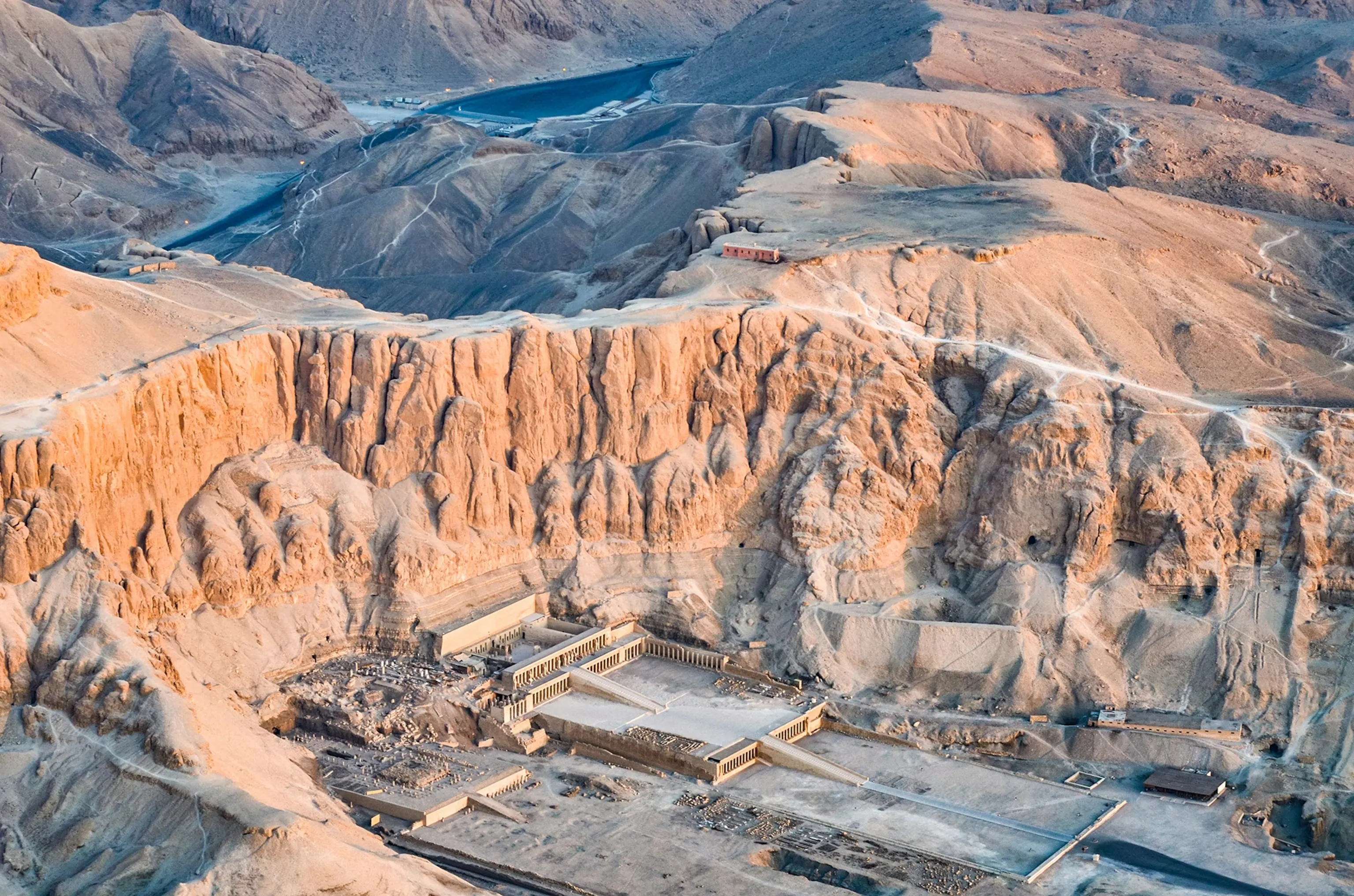
Plan Your Visit to Valley of the Kings Tours
A proposal layout to compare timing, route flow, and ticket strategy before you book.
This page is a proposal layout to help you compare timing, route flow, and ticket strategy before you book. It is not a strict itinerary; adjust your visit based on your energy, interests, and timing.
When to visit
08:00–10:30 is usually the smartest and coolest window
In Luxor, your comfort and focus change dramatically with the sun. Early entry usually means softer light, better photos in and around tomb entrances, and less crowd compression before large tour groups stack up deeper in the valley.
Entry & queues
Pre-booked tickets reduce friction, but security and tomb-access flow can still create waits.
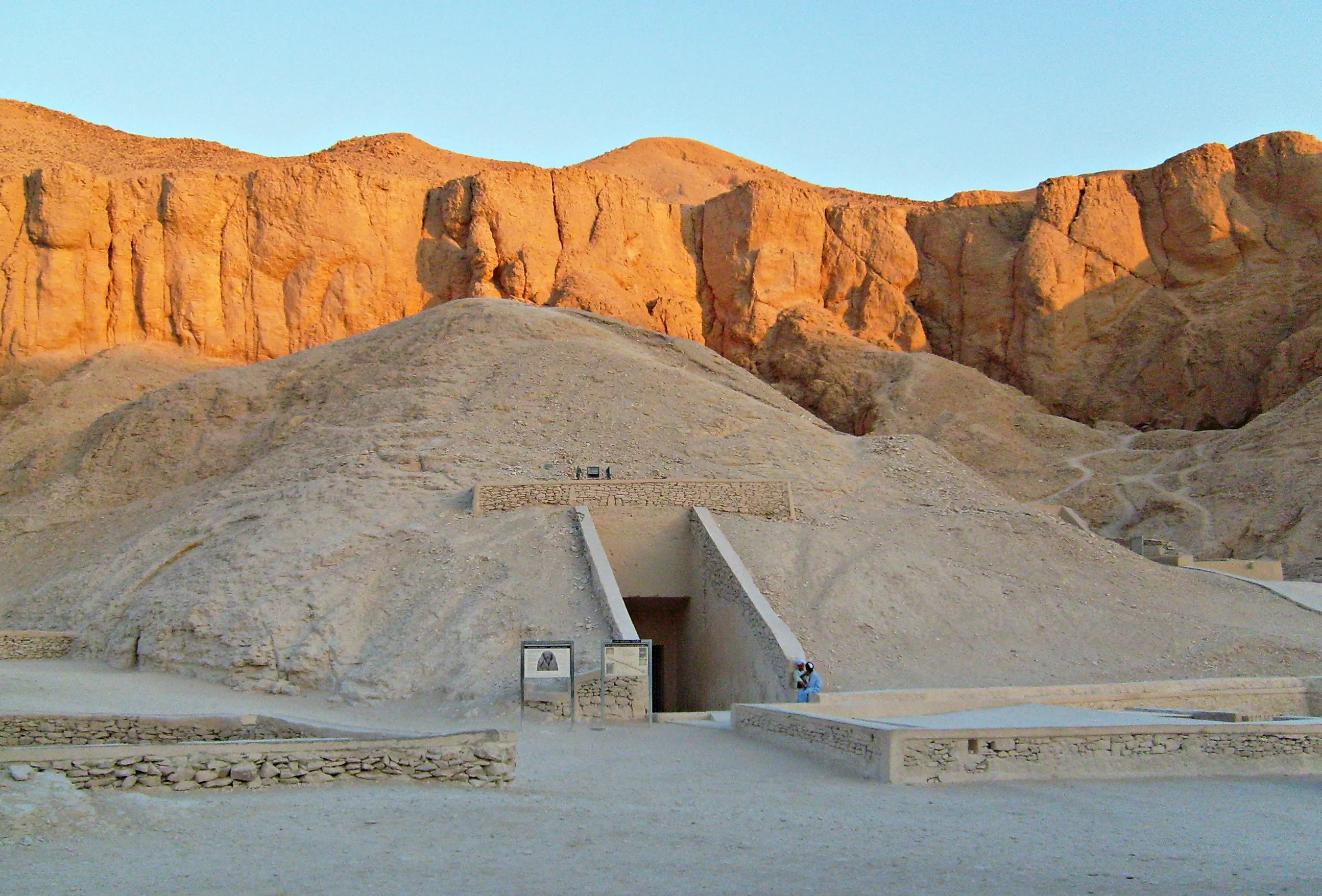
Even with pre-booked entry, plan for checkpoints, shuttle movement, and staggered access around popular tomb clusters. Arrive 20–30 minutes early, keep your QR and ID ready offline, and expect a slower rhythm near famous chambers such as KV62 on busy days.
How long to allow
2–4 hours
A focused visit can fit in about 2 hours if you prioritize a small set of tombs. A richer pace with interpretation time, comfort breaks, and selected add-on sites usually takes 3–4 hours, especially when combining entrances and transfer logistics from central Luxor.
Often missed
Seti I context, workers’ craft story, and landscape reading
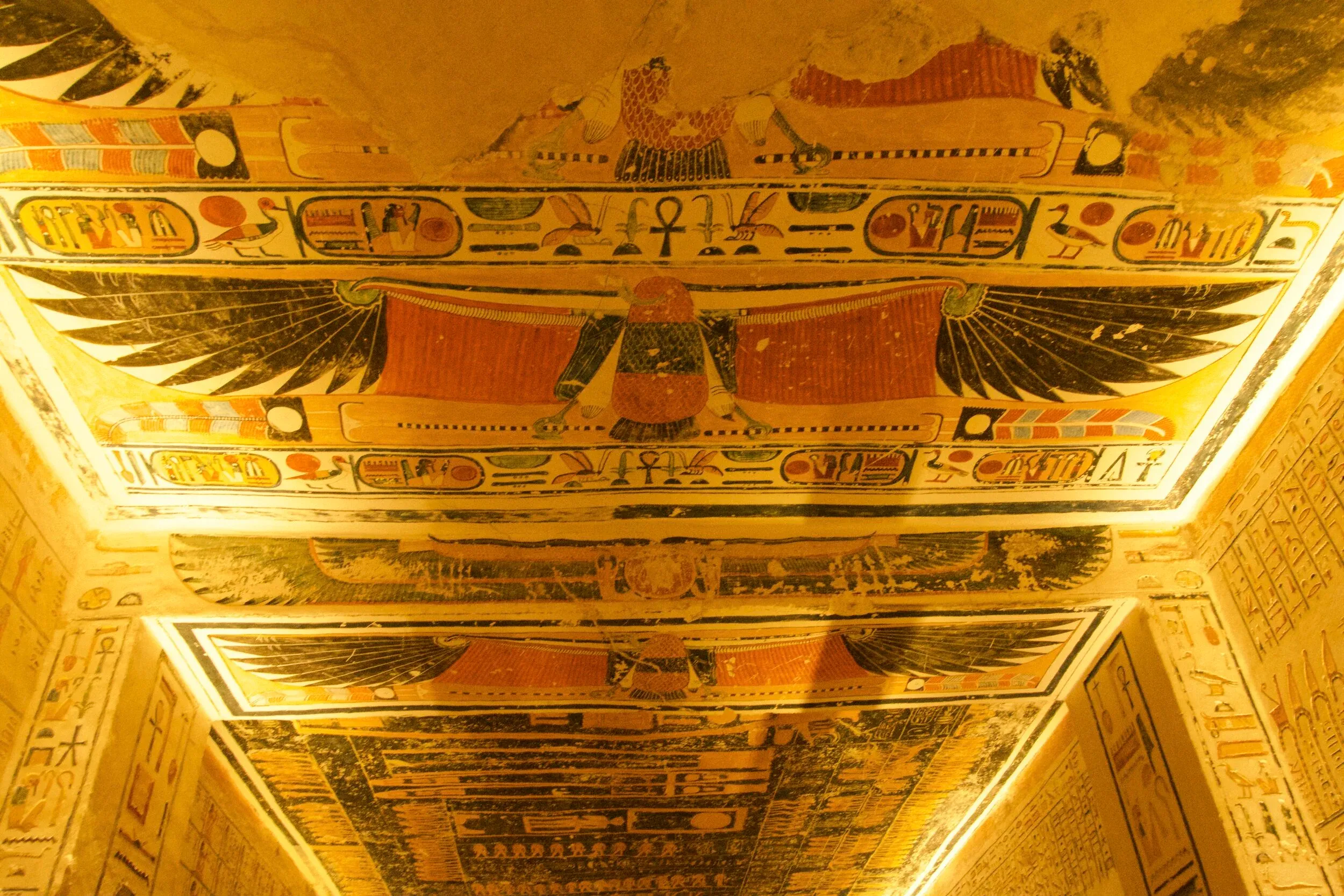
Many visitors rush chamber to chamber and miss the bigger narrative: why this valley was chosen, how artisans worked, and how theology shaped every painted surface.
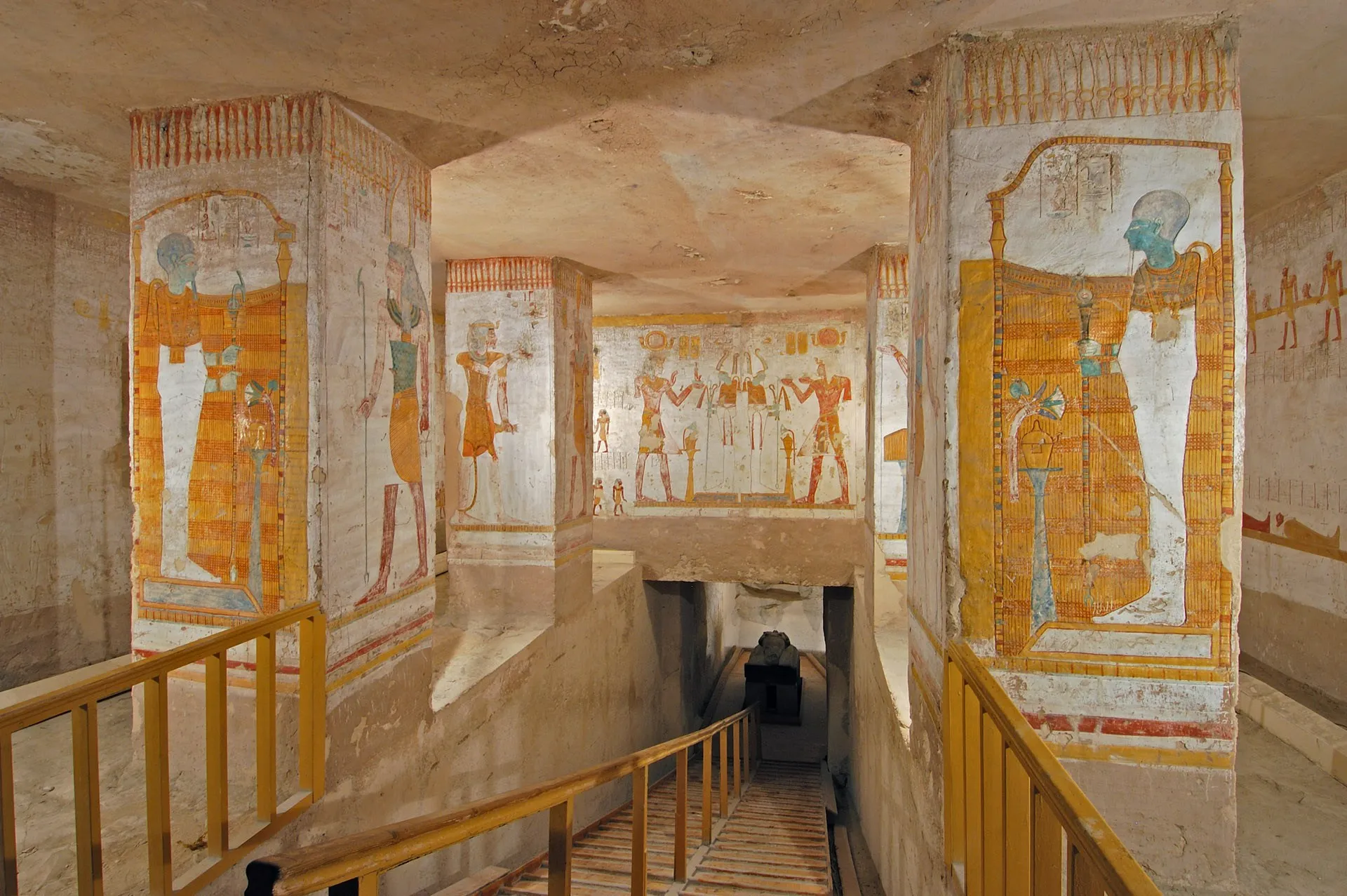
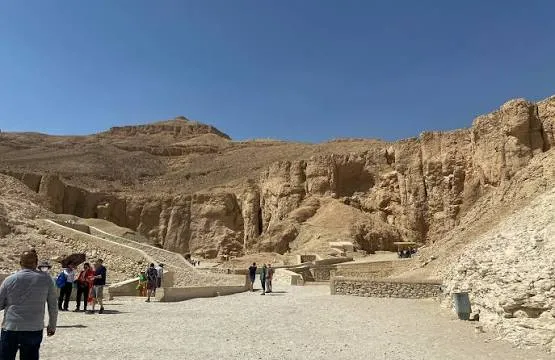
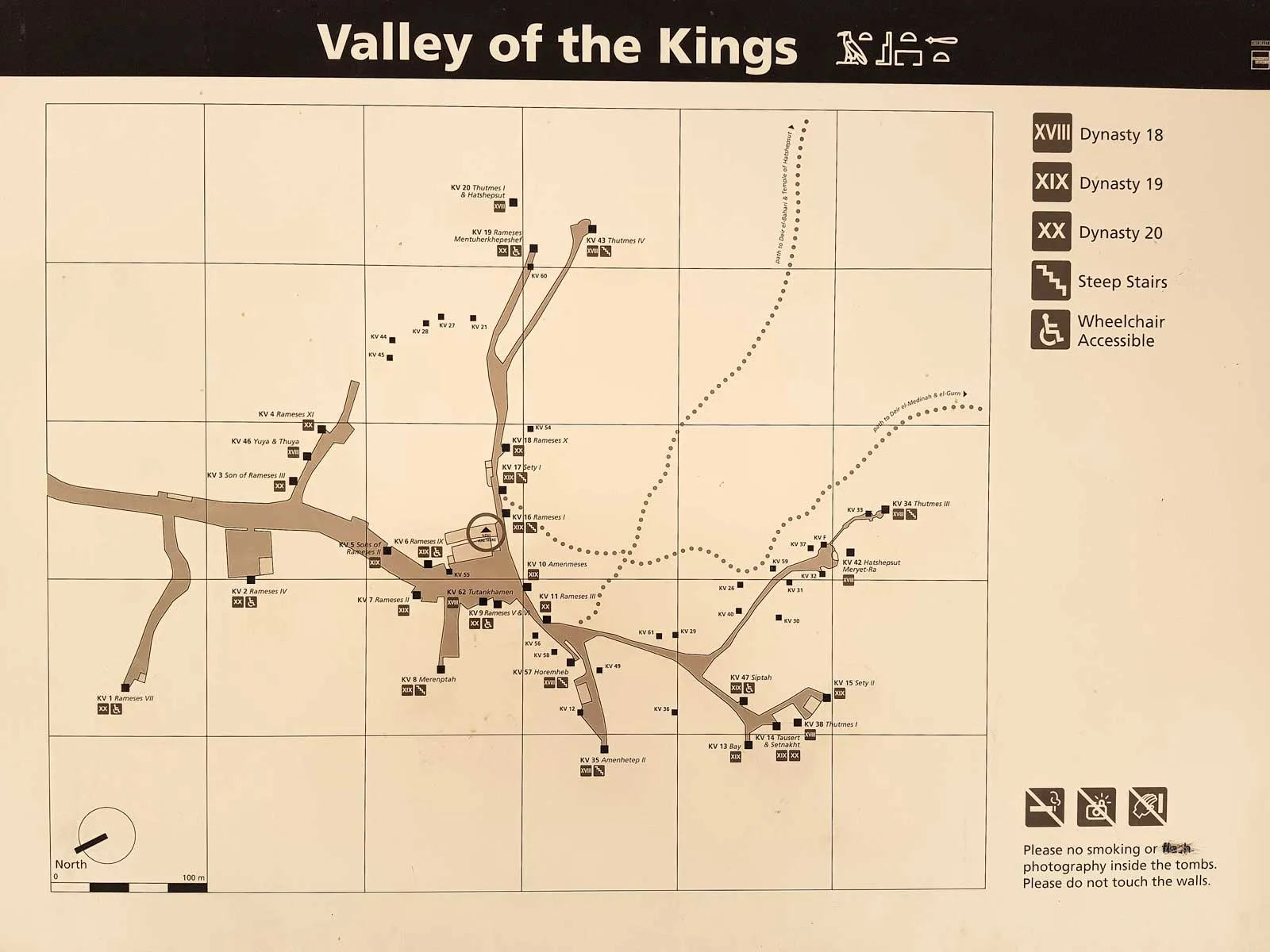
Use these visual cues to map arrival, heat-aware timing, and on-site flow. Each section helps you move through the Valley of the Kings calmly, with realistic expectations for queues, walking effort, and decision points between standard and premium tomb access.
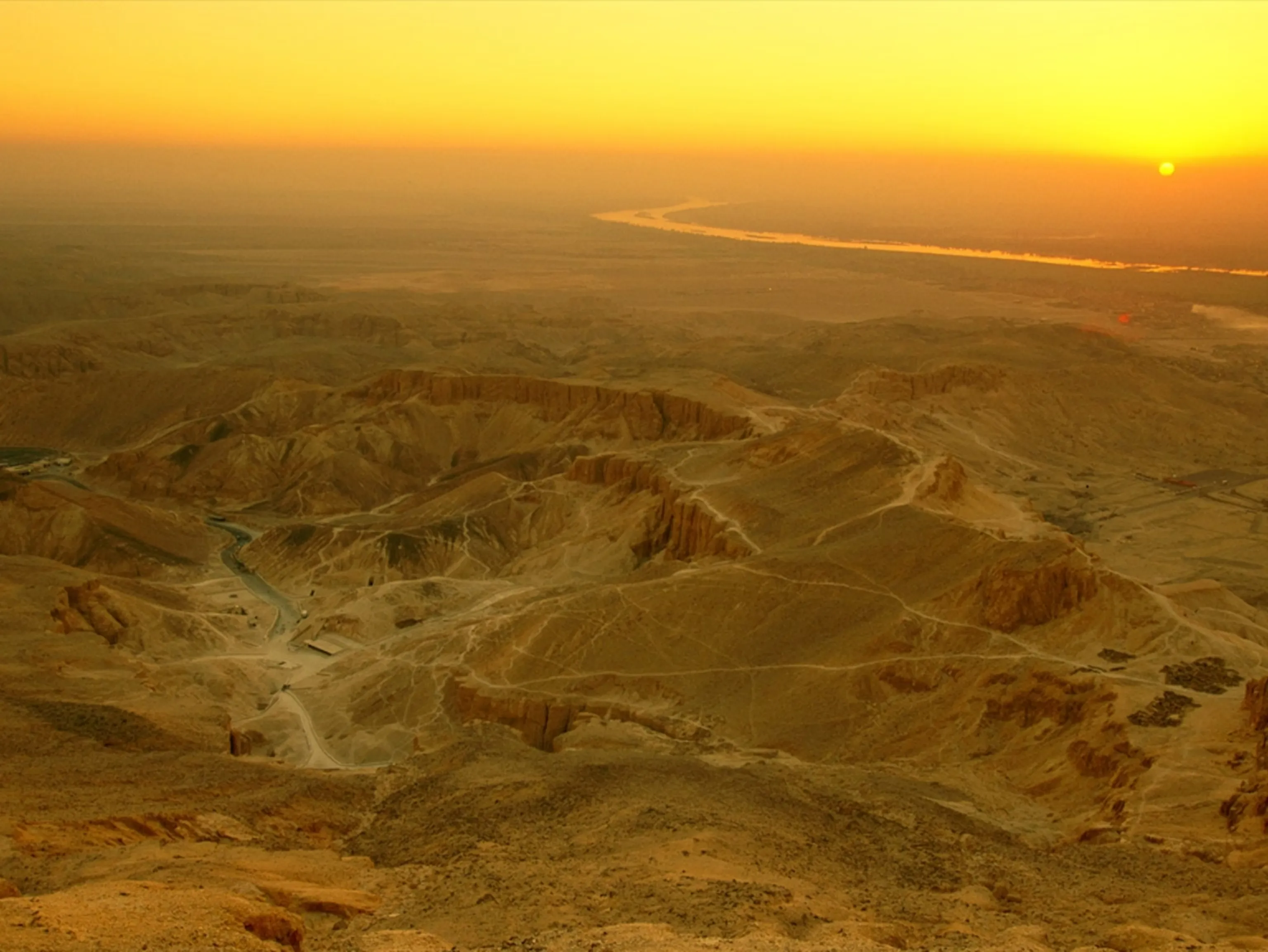
Approach and orientation
See where to enter, how to approach from Luxor, and which departure windows protect your energy before the midday heat rises.
Pace and route timing
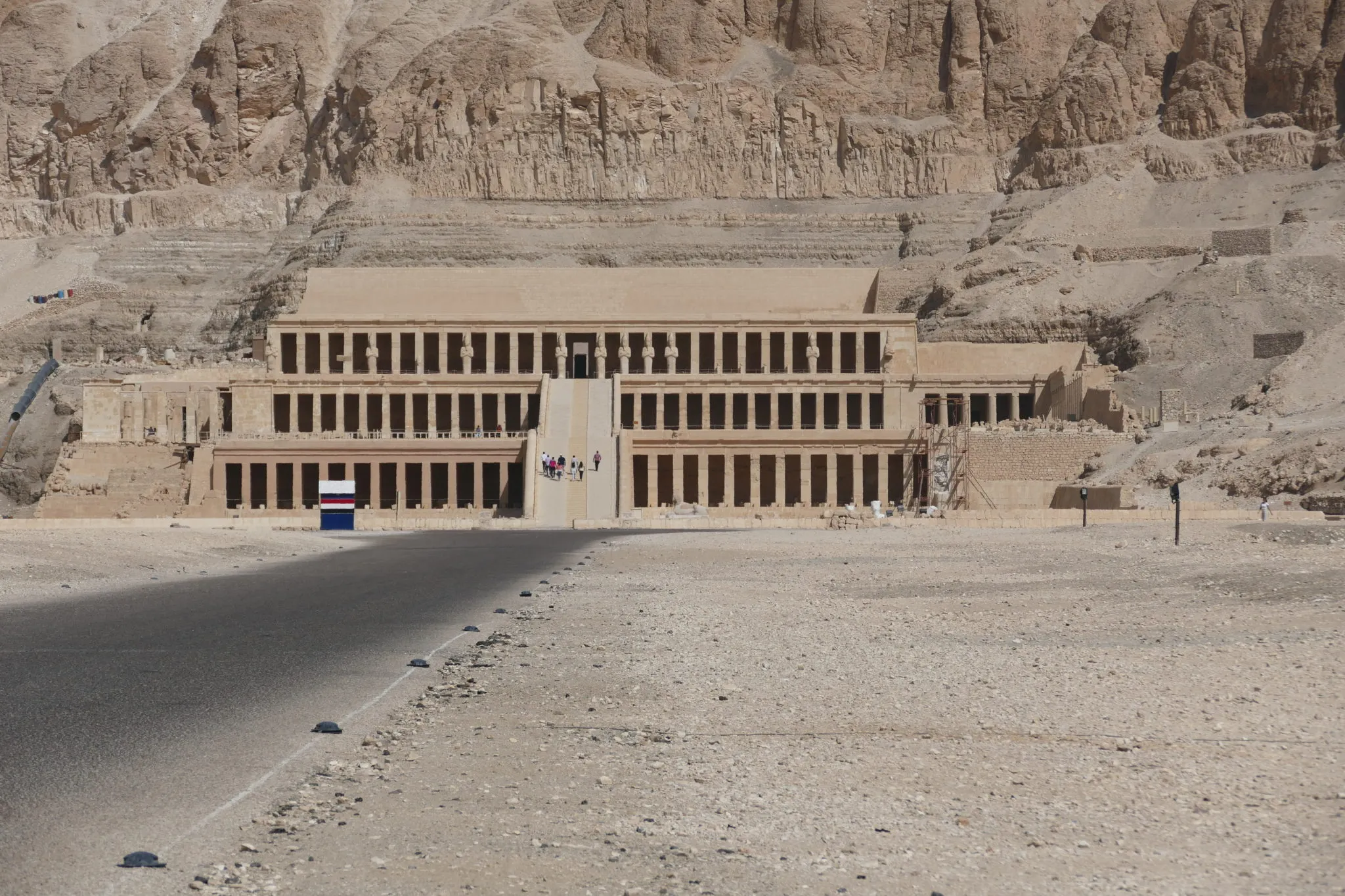
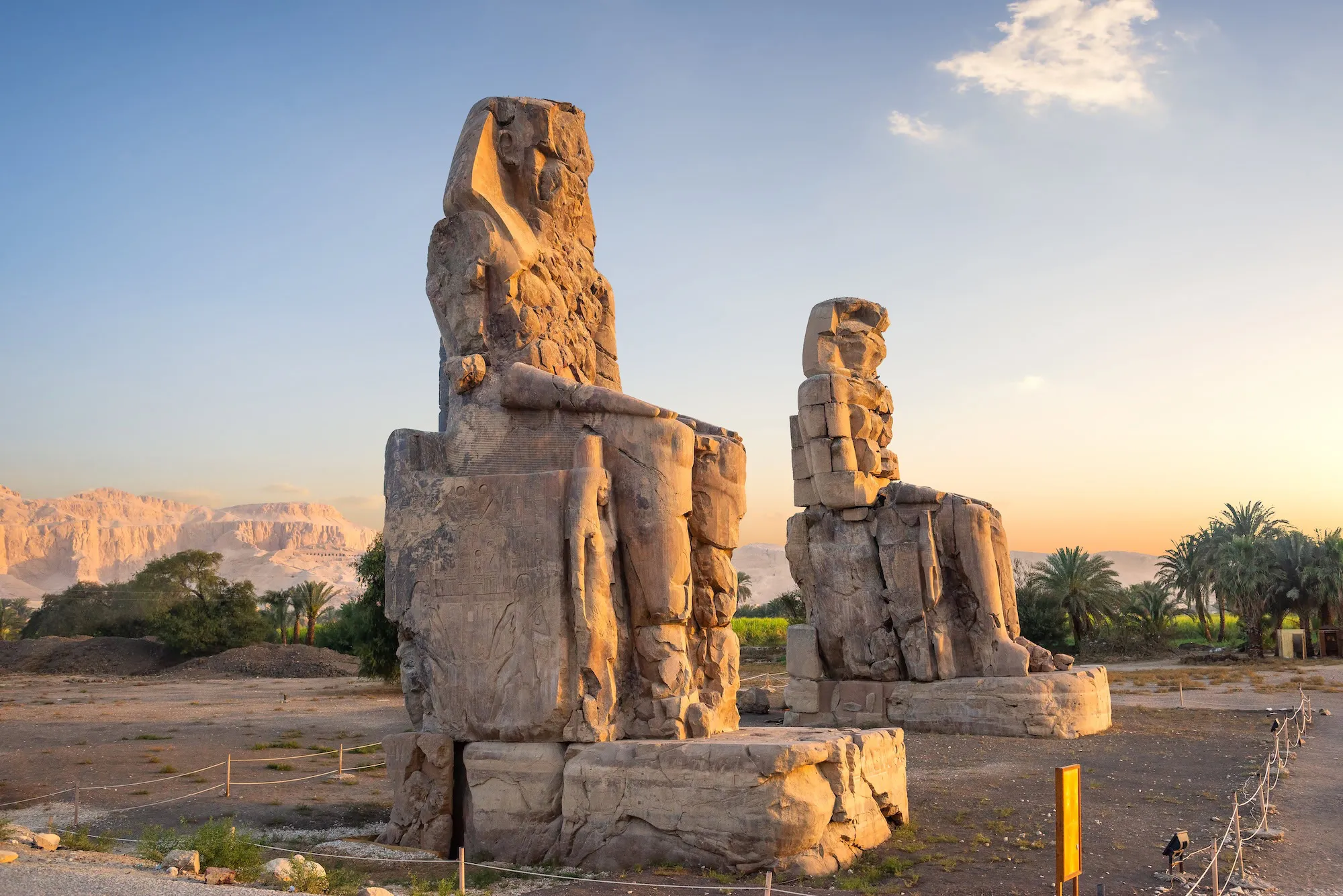
Choose a time budget that matches your pace, tolerance for heat, and whether you are combining Hatshepsut Temple or the Colossi of Memnon the same day.
Ticket strategy
Compare entry types with practical context, so your booking matches the experience you actually want on the ground.
The Valley of the Kings sits on Luxor’s West Bank, reached by road transfer from city hotels, Nile-side stays, and most guided departure points.
By Train
If you arrive by train in Luxor, continue by taxi or pre-arranged transfer to the West Bank visitor entrance area.
By Bus
Most visitors use organized coach or minibus tours with hotel pickup; independent public options are limited and less predictable.
Peak windows
Late morning, school-group windows, and high-season weekends are typically the most congested periods.
Calmer windows
Best comfort usually comes from first-entry departures and shoulder-season weekdays, when heat and crowd pressure are both lower.
The smoothest Valley visits come from queue strategy, not speed. Choose your first tomb target early, hydrate before entry, and budget movement time between checkpoints, shuttle points, and popular chambers.
Pre-booked timed entry
Typical wait: 10–25 minutes at busy times
Best for travelers who want predictable planning and less stress at purchase points.
On-site ticket buyers
Typical wait: 30–75 minutes at peak
Most exposed to late-morning backlog and heat build-up near entry control zones.
Premium tomb supplement lines
Typical wait: 10–35 minutes
Treat premium access as a second operational step; it is not always frictionless even when the main gate moves quickly.
Use this quick matrix to balance crowd risk, thermal comfort, and photo quality across the day.
First-entry morning window
Crowd risk: Low
Cooler conditions and cleaner circulation through major tomb corridors before group surges.
11:00–14:30 midday window
Crowd risk: High
Heat, bus overlap, and bottlenecks around signature tombs combine into the slowest flow.
Late afternoon approach
Crowd risk: Medium
Crowds can ease, but remaining access time may narrow what you can comfortably include.
Choose your time budget
Quick visit
Estimated time: 2–2.5 hours
Prioritize a compact tomb set, move steadily, and keep one flexibility slot for queue surprises.
Complete visit
Estimated time: 3–4 hours
Visit core tombs with slower interpretation pace, planned shade breaks, and optional premium chamber access.
Half-day West Bank combination
Estimated time: 4–6 hours total
Valley of the Kings first, then Hatshepsut Temple and the Colossi of Memnon with transfer buffers.
Select ticket type
Standard valley entry
Included: Access to the main Valley circuit and a selected set of standard tomb categories.
Best for: Independent travelers focused on core highlights and efficient pacing.
from: From EGP-based local rates
Entry + audio guidance
Included: General entry paired with mobile narration, offline context notes, and route tips.
Best for: First-time visitors who want structure without joining a fixed group.
from: From standard entry + guide add-on
Guided premium experience
Included: Facilitated routing, deeper interpretation, and help navigating premium tomb decisions.
Best for: Peak-demand days, limited-time itineraries, or visitors seeking strong historical framing.
from: From operator-dependent rates
For network scalability, keep ticket comparisons fully key-driven and tenant-specific.
Step 1 - Arrive before the heat curve
Reach the entrance 20–30 minutes early, hydrate, and secure your first tomb target before queues stretch.
Step 2 - Prioritize high-demand chambers
Visit your most important tombs first, when corridors are cooler and movement is less interrupted.
Step 3 - Add interpretation, not just checkmarks
Pause to read iconography and context; even short guided explanations transform what you see underground.
Step 4 - Finish with adjacent West Bank highlights
If energy allows, close the route with Hatshepsut Temple or the Colossi of Memnon instead of forcing extra tomb lines.
These are the highest-regret misses when travelers rush the valley.
- Skipping context before entry: without orientation, many paintings feel repetitive instead of narrative-rich.
- Ignoring heat pacing: dehydration and overexposure reduce both focus and enjoyment inside chambers.
- Overloading the schedule: fewer tombs with deliberate reading usually beats a rushed checklist approach.
A two-minute readiness check prevents most avoidable delays and discomfort.
- Arrive 20–30 minutes early with your ticket QR, ID, and payment backup ready offline.
- Carry a compact bag only; large luggage and oversized packs are typically restricted.
- Bring eligibility proof for reduced categories where verification may be required on-site.
- Treat premium tomb access as a separate queue decision in your time budget.
- Bring water, hat, and sun protection for exposed walking segments between stops.
- Download guide content in advance because network reliability can vary in the valley area.
Bring these essentials so entry and your tour stay smooth.
- A valid photo ID plus your digital ticket confirmation and backup screenshot.
- A refillable water bottle and electrolyte support for dry heat conditions.
- Sun protection: hat, sunscreen, and sunglasses with high UV coverage.
- A fully charged phone and power bank for navigation, tickets, and photos.
Dress for heat management, walking stability, and respectful cultural-site etiquette.
- Wear grippy, closed walking shoes suited to stone, dust, and uneven gradients.
- Choose breathable layers that regulate temperature between sun exposure and tomb interiors.
- Prefer light colors and sun-shielding fabrics during warmer months.
- Carry a light cover layer for early departures, wind, or seasonal temperature shifts.
- Wheelchair assistance can be requested in advance through your provider where available.
- Audio-guide users should bring headphones and a fully charged device.
- Standard and premium tomb access can follow separate operational flows.
- Bulky luggage and oversized backpacks are generally restricted.
- Food policies vary by area; avoid consuming snacks inside protected tomb spaces.
- Photo permissions vary by chamber and policy updates; always follow on-site signage.
- Book early in high season, especially for early-morning windows.
- Plan premium tomb priorities in advance so you do not decide under queue pressure.
- Travel light to reduce delay at checks and move faster between zones.
For a smooth Valley experience, plan at least 2 hours for a focused route and 3–4 hours for a richer visit with interpretation breaks and selective premium access.
It is often worth it on busy days. The biggest gain is not magic line removal, but better routing decisions, stronger historical framing, and less wasted energy under heat pressure.
Early morning is consistently the strongest choice for comfort, queue control, and photo conditions, especially from late spring through early autumn.
Yes. The most practical half-day combination is Valley of the Kings with Hatshepsut Temple and the Colossi of Memnon, with transfer buffers between each stop.