Where pharaohs prepared for eternity
Each corridor, chamber, and painted wall reveals a chapter of ancient Egyptian belief, power, and memory.
Table of Contents
From Thebes to royal necropolis
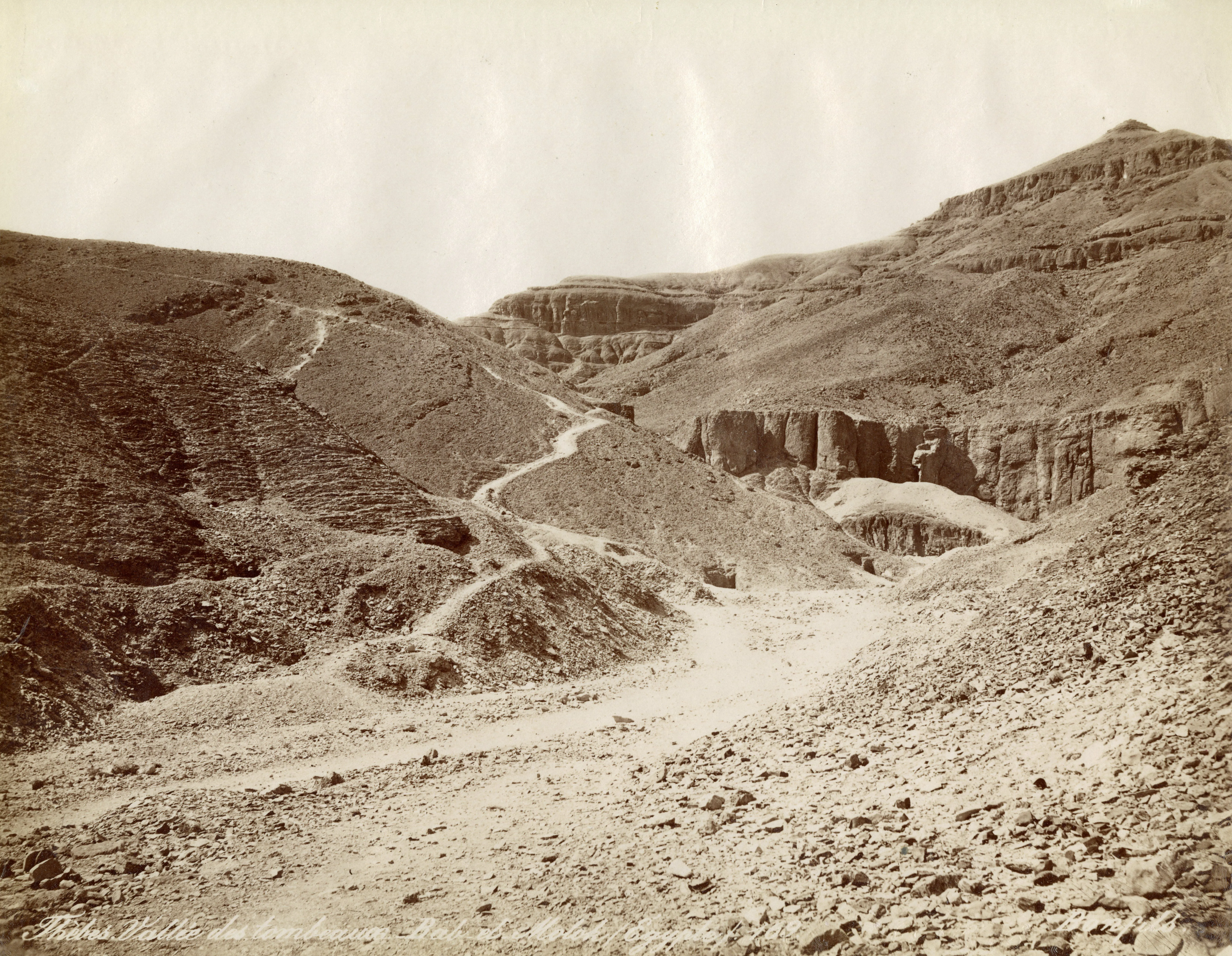
Long before modern visitors crossed the Nile in air-conditioned vans and tour buses, this landscape formed part of ancient Thebes, the ceremonial and political heart of New Kingdom Egypt. On the East Bank, colossal temples like Karnak and Luxor projected divine kingship through processions, pylons, and towering columns. Across the river on the West Bank, where the sun seemed to die each evening, Egyptians saw a sacred geography linked to death, rebirth, and transformation. This symbolic contrast between east and west shaped how rulers imagined eternity: life and kingship on one shore, burial and regeneration on the other.
By the 16th century BCE, pharaohs began shifting away from obvious pyramid-style royal monuments toward hidden rock-cut tombs in remote valleys. The result was what we now call the Valley of the Kings, a place where architecture, theology, and political power fused into one extraordinary funerary system. To walk here today is to step into a deliberate ritual landscape: harsh, silent, and monumental, designed to protect royal bodies and guide royal souls through the cosmic night toward rebirth with the rising sun.
Why the valley was chosen
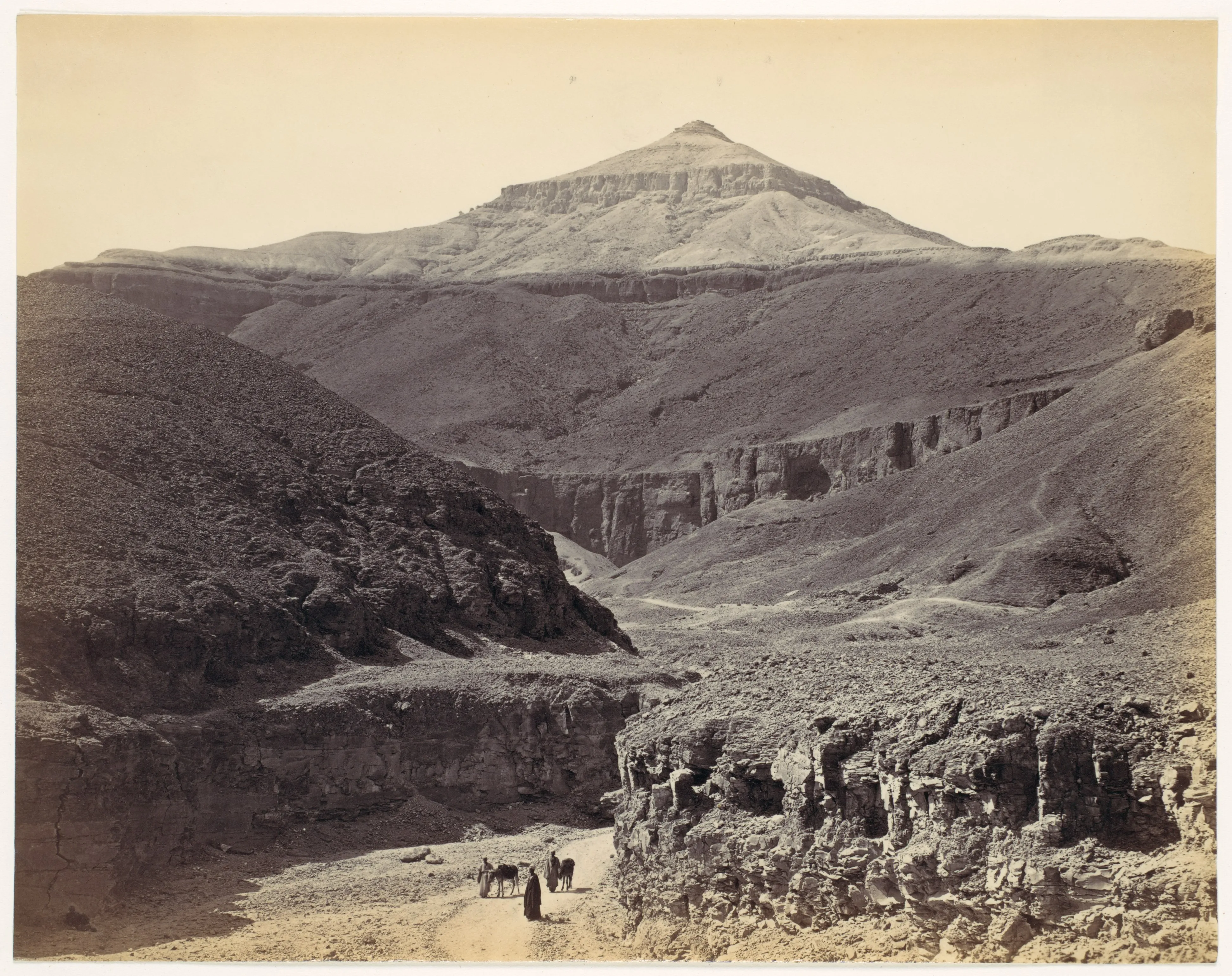
The Valley of the Kings was not chosen by chance. Its dry climate, concealed side wadis, and difficult terrain offered better protection than exposed funerary complexes on open plains. The peak of el-Qurn, rising like a natural pyramid above the valley, may also have held symbolic significance, echoing older royal traditions while supporting a newer strategy of secrecy. In this setting, tomb entrances could be cut discreetly into the bedrock, then concealed after burial ceremonies.
Yet practical security was only part of the story. The valley also embodied sacred order. Royal tombs were conceived as journeys through darkness toward renewal, mirroring the nightly voyage of the sun god through the underworld. Descending corridors, chambers, and painted ceilings were not mere decoration; they formed a ritual map for the king’s transformation into an eternal, divine presence. Even today, the route through each tomb feels intentionally choreographed, moving from daylight into a symbolic cosmos beneath the mountain.
How tombs were designed and built
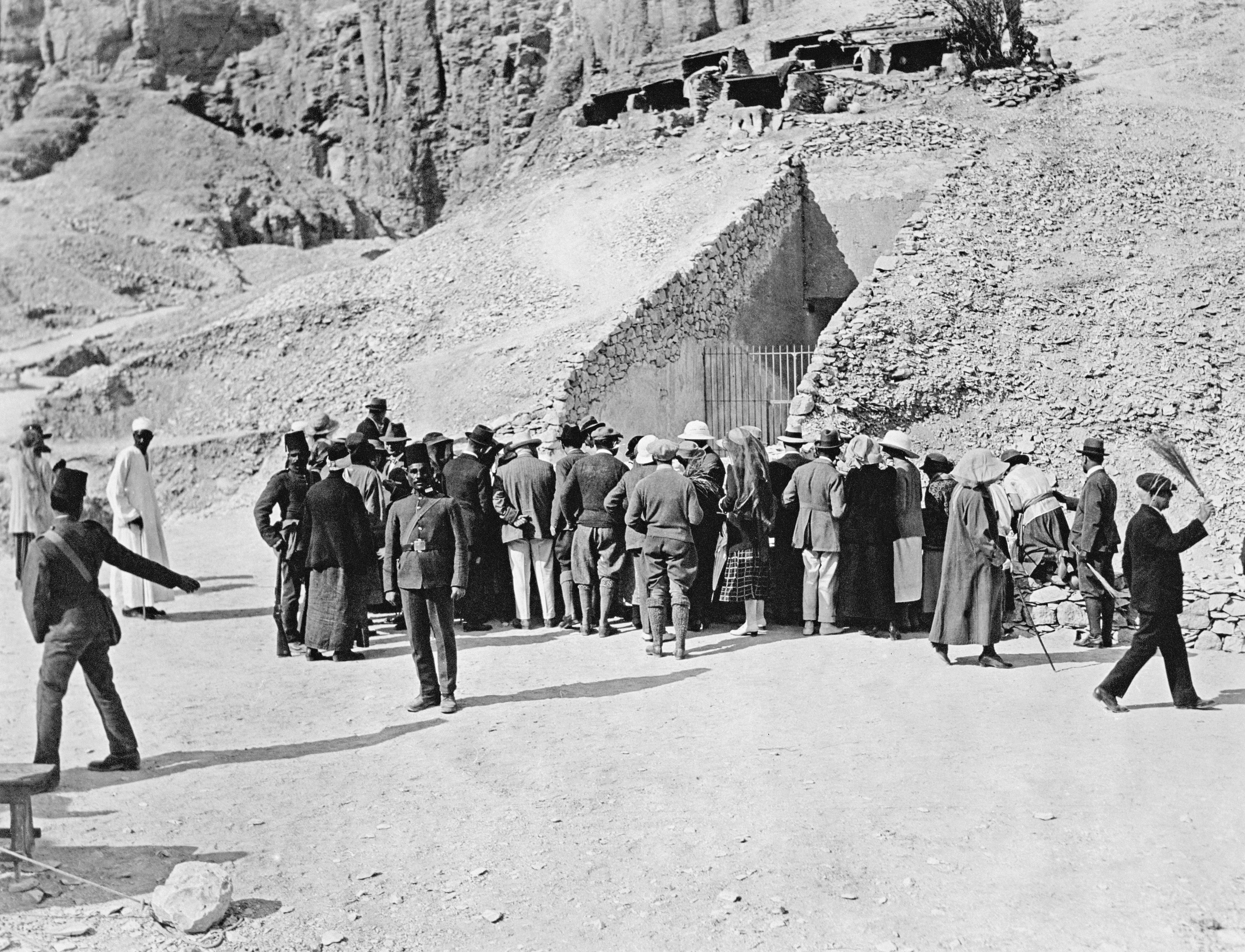
Building a royal tomb was a multiyear effort involving architects, quarry workers, plasterers, draughtsmen, and master painters. Teams from nearby Deir el-Medina, a settlement of highly skilled craftsmen, carved corridors into limestone, corrected unstable rock, and prepared walls with plaster layers before applying ink sketches and color. The work had to balance engineering and symbolism: chamber dimensions, alignment, and decorative programs all reflected theological priorities as well as practical constraints.
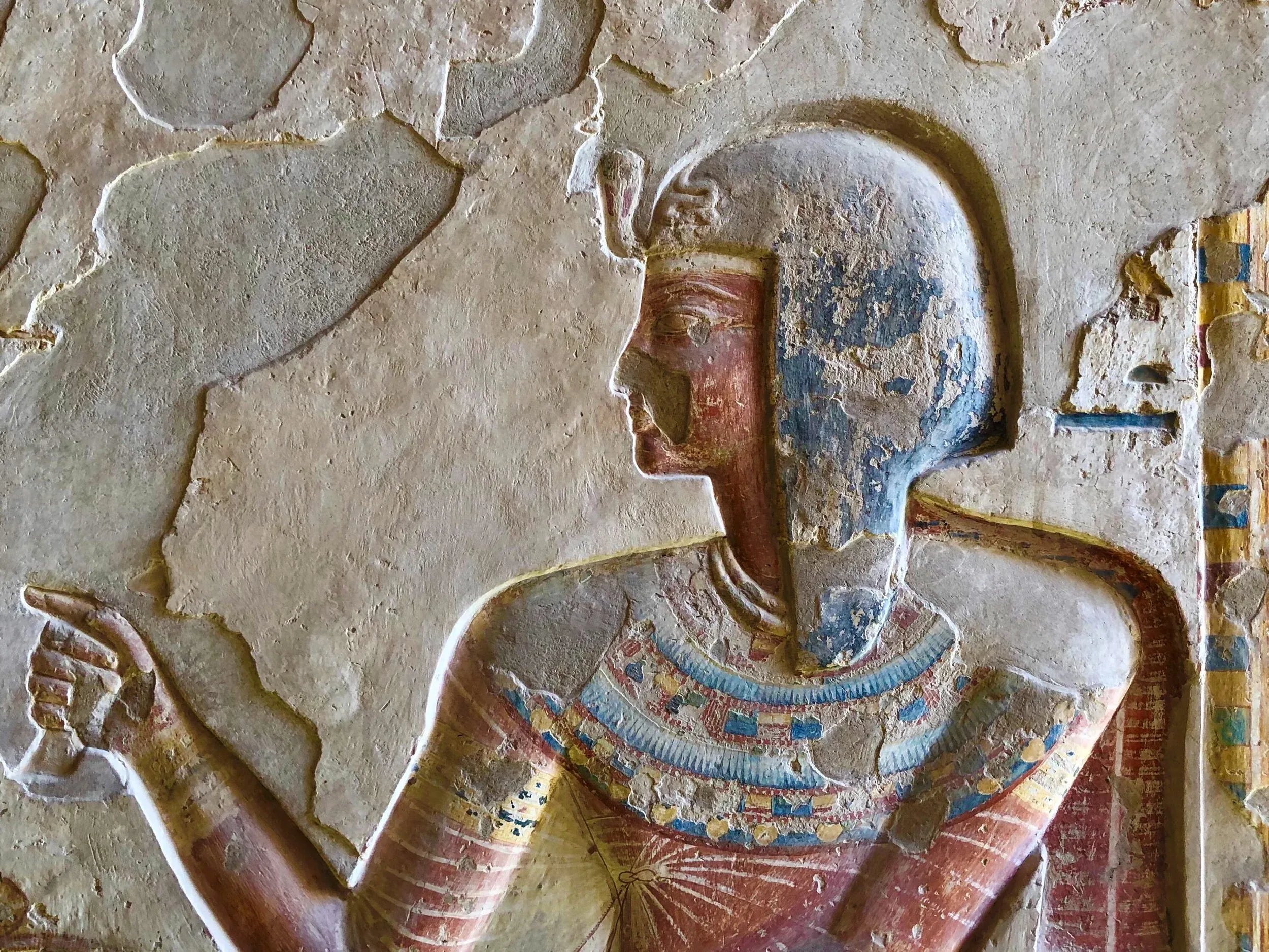
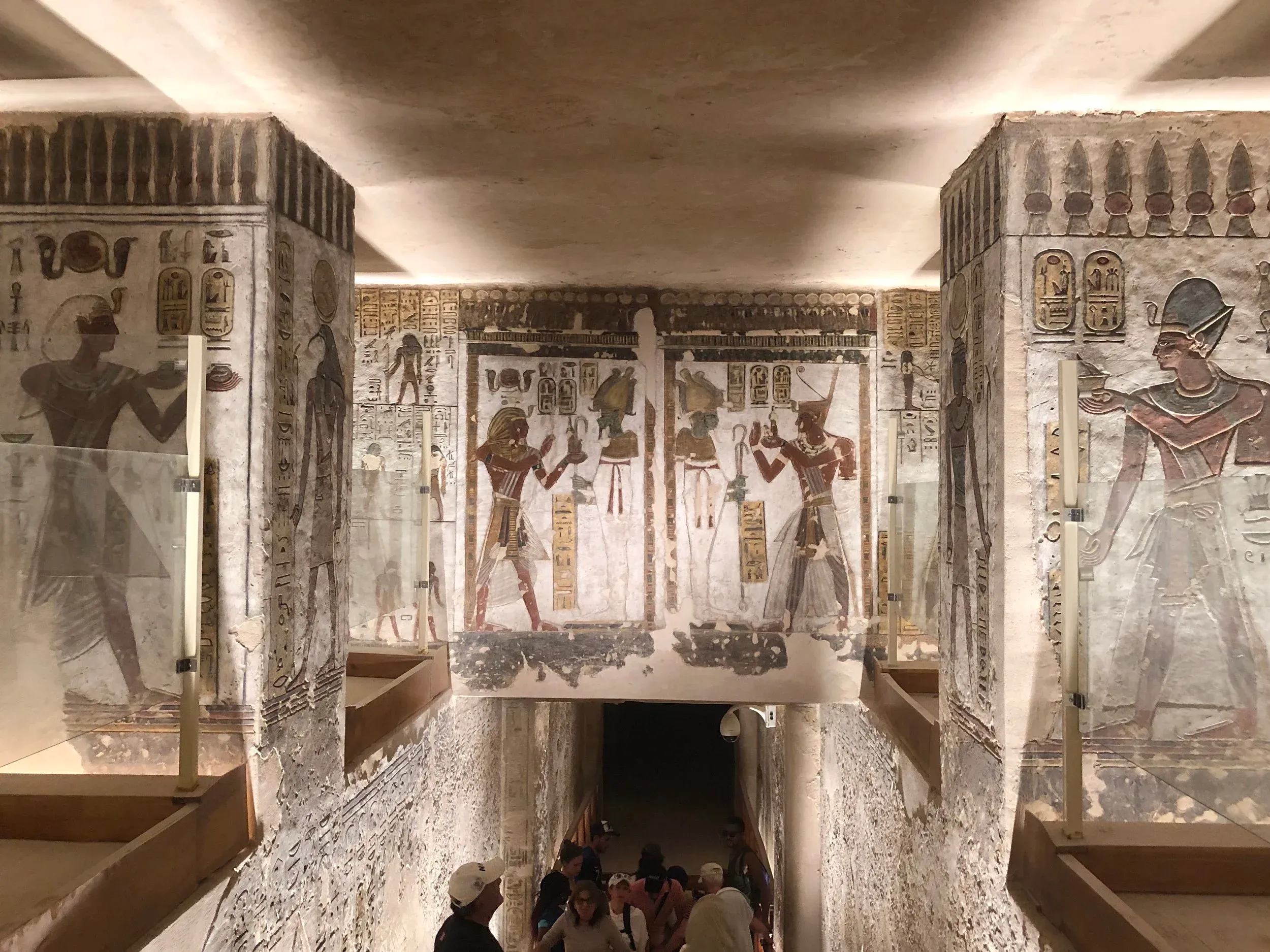
The artistry remains astonishing. In many chambers, you can still trace fine black outlines beneath pigments where artists first planned each figure. Gods, guardians, serpents, stars, and ritual texts unfold in ordered registers, almost like a visual manuscript wrapping the king in protective knowledge. What appears decorative at first glance is deeply functional in ancient terms: every image, sign, and formula was part of a spiritual technology designed to ensure successful rebirth in the afterlife.
Tutankhamun and the global fascination
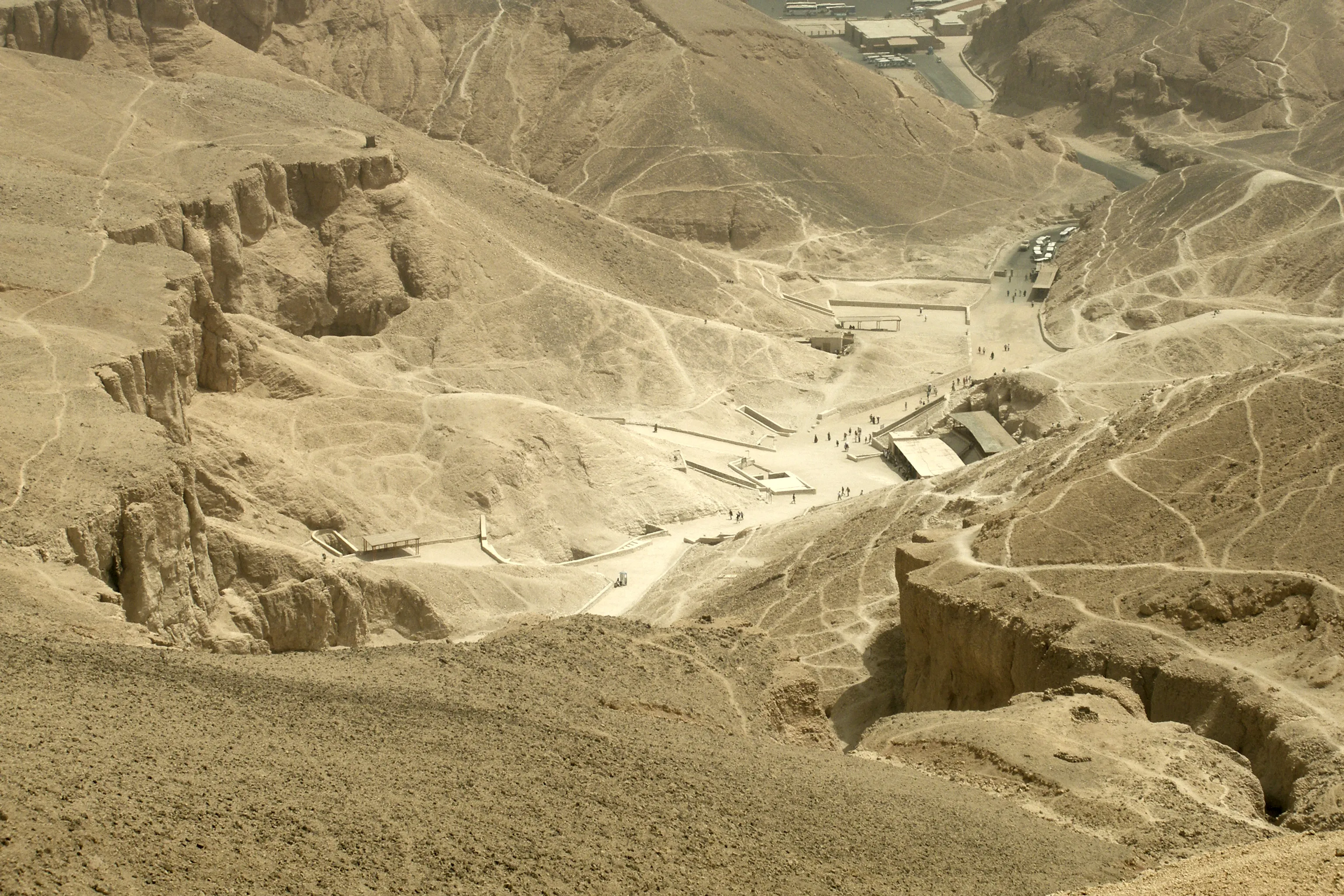
No modern story of the Valley of the Kings is complete without Tutankhamun. In 1922, Howard Carter’s discovery of the young king’s tomb electrified the world, not because Tutankhamun had been the most powerful ruler, but because his burial remained comparatively intact. The extraordinary objects found within—from the iconic gold mask to ceremonial furniture and chariots—reshaped public imagination and launched a global wave of fascination with ancient Egypt.
Today, visiting Tutankhamun’s tomb offers a different kind of impact: intimate scale, quiet atmosphere, and the realization that this globally famous pharaoh died very young. Many travelers are surprised by how personal the space feels compared with grand temple architecture. It is a reminder that the Valley is not only about monumental history, but also about individual lives, abrupt endings, and the human desire to endure through memory and ritual.
Sacred texts on the tomb walls
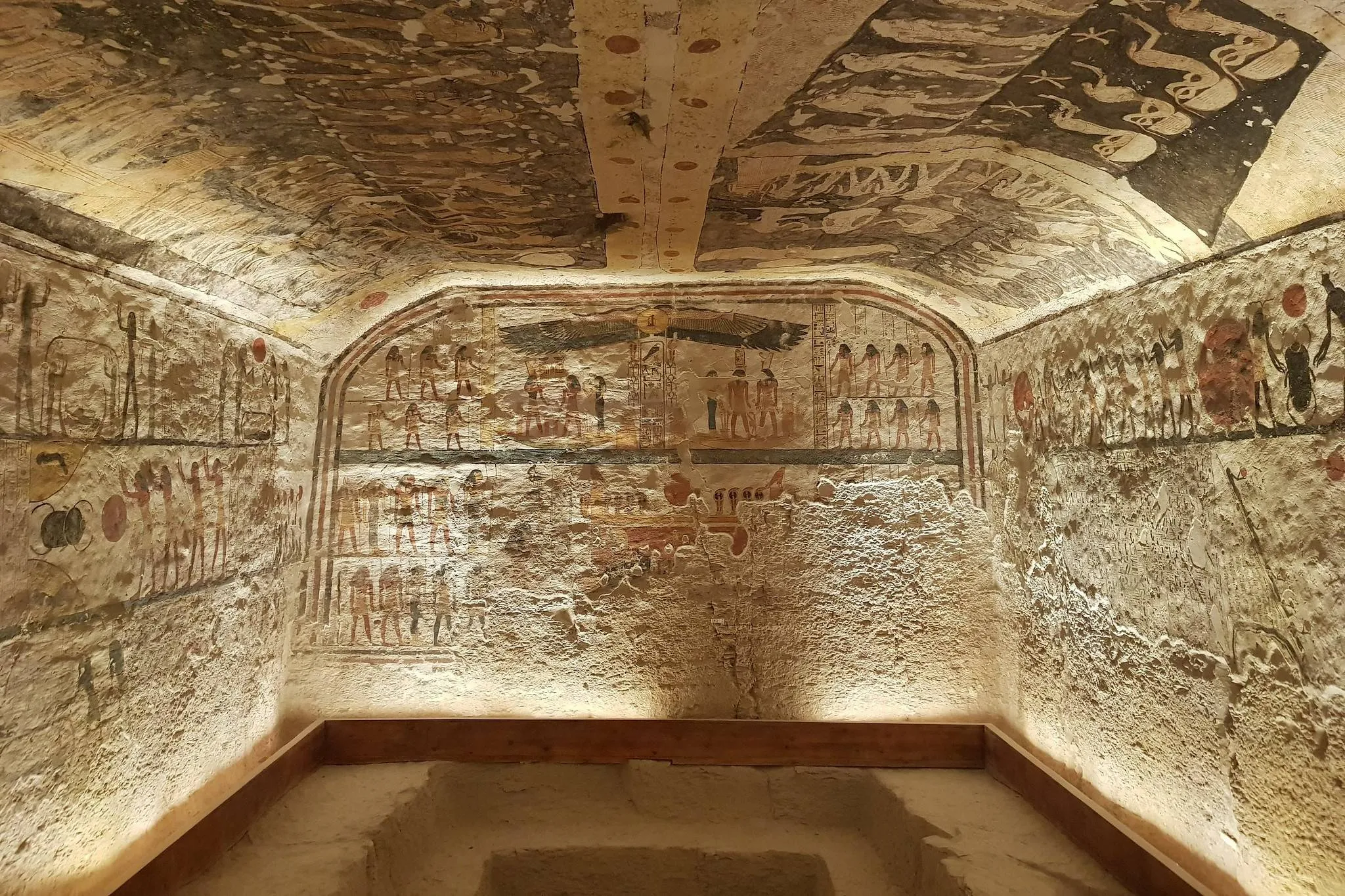
One of the most compelling aspects of a Valley visit is reading the tombs as sacred literature in visual form. Scenes from texts such as the Amduat, the Book of Gates, and the Litany of Ra describe the sun god’s nocturnal passage and the obstacles faced before dawn. The king, identified with divine power, follows this path to defeat chaos and emerge renewed. For ancient viewers, these images were not symbolic art alone; they were active, protective knowledge.
Details vary dramatically between tombs. Some chambers emphasize cosmic geography with segmented underworld zones; others focus on divine encounter, ritual speech, or celestial cycles. This variation reflects changing religious priorities, artistic schools, and royal identities across dynasties. Even if you do not read hieroglyphs, the rhythm of repeated figures, boats, gates, and guardian deities communicates a coherent worldview where order is constantly defended against darkness.
Queens, nobles, and the wider landscape
Although the Valley of the Kings is the headline destination, it sits within a broader funerary ecosystem. Nearby lie the Valley of the Queens, nobles’ tombs, mortuary temples, and workers’ settlements that reveal how royal burial programs depended on entire communities. These related sites add social depth to the pharaonic story, showing not only kings and gods but also administrators, artisans, priests, and families whose labor sustained the necropolis.
Including one or two complementary sites in your itinerary can transform your understanding of ancient Thebes. The Valley gives you royal ideology at its most concentrated; surrounding monuments show how that ideology was produced, maintained, and remembered. Together they offer a richer narrative than any single stop, linking grandeur with everyday human craftsmanship.
Archaeology, discovery, and modern science
The Valley’s modern history is also a story of excavation methods evolving over time. Early explorers mapped and collected, sometimes with incomplete records by today’s standards. Later missions introduced more systematic documentation, conservation science, and contextual archaeology. Stratigraphic study, epigraphy, and environmental monitoring now help researchers interpret not only objects, but also burial practices, restoration phases, and long-term site changes.
Contemporary science continues to refine what we know. High-resolution imaging, material analysis, and non-invasive survey techniques reveal pigment composition, tool marks, microclimate stress, and previously unnoticed features. For visitors, this means the Valley is not a closed chapter of the past but an active research landscape, where each season can produce new insights about technology, belief, and royal identity.
Conservation challenges today
Preserving tomb interiors is a constant challenge. Human presence increases humidity, heat fluctuation, and particulate exposure, all of which can affect fragile plaster and pigments over time. Even respectful tourism creates cumulative pressure, especially in narrower chambers with limited airflow. As a result, authorities rotate tomb access, enforce capacity controls, and occasionally close areas for stabilization and documentation.
These measures can feel restrictive in the moment, but they are essential for long-term survival of the artwork. Responsible visitation—staying on paths, avoiding contact with walls, and following staff guidance—directly supports conservation goals. In practical terms, every careful visitor helps ensure that future generations can still experience these painted chambers in meaningful condition.
Visiting with cultural sensitivity
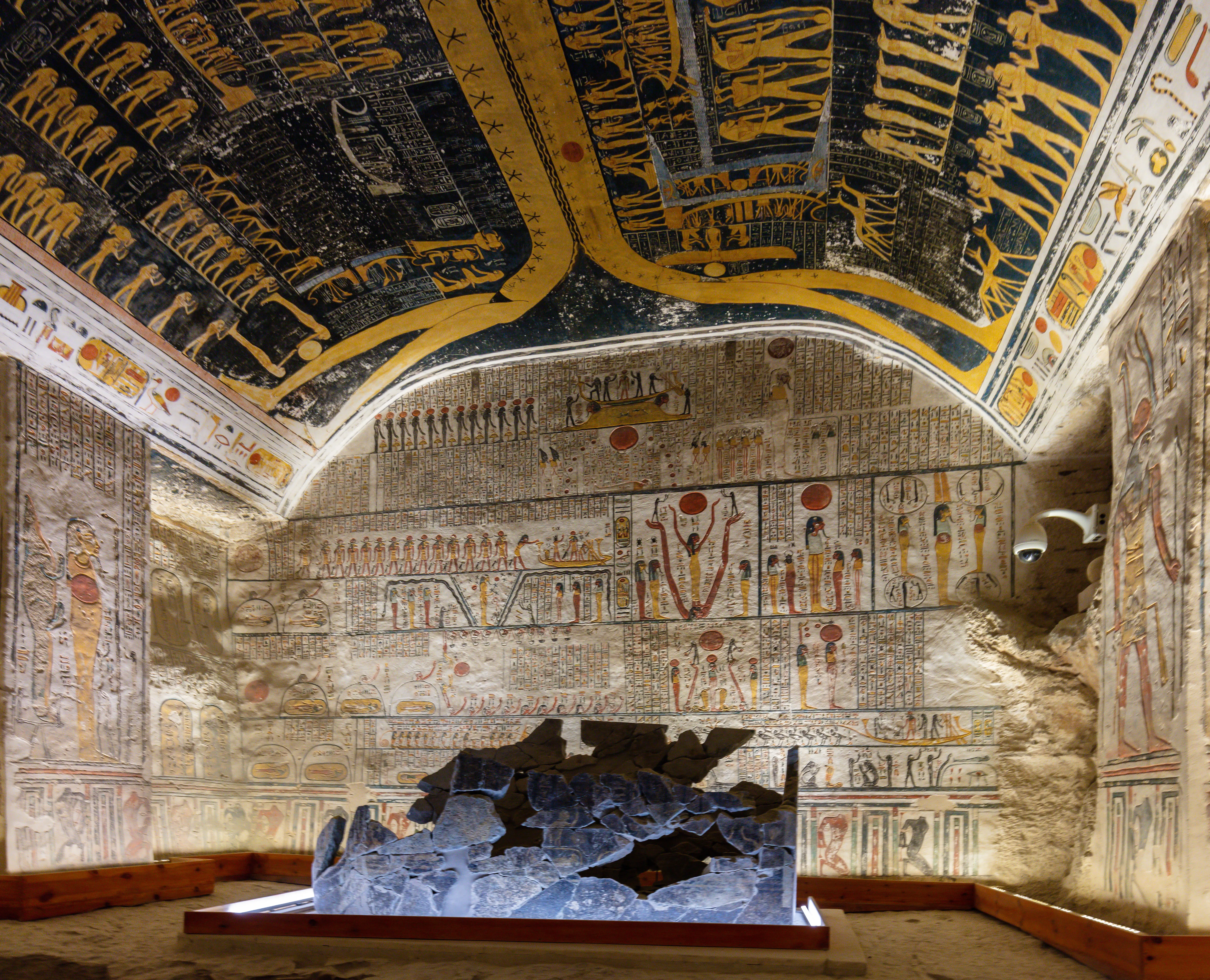
The Valley of the Kings is both a global destination and a national heritage treasure with deep cultural significance. A respectful approach goes beyond basic rules: it means understanding that these spaces were sacred environments, not decorative backdrops. Quiet observation, patient movement in narrow passages, and attention to guide instructions all contribute to a better experience for everyone on site.
Small choices matter. Give space to others in confined chambers, avoid flash if prohibited, and follow posted photography policies carefully. If you hire local guides, drivers, or craftspeople, you also support a living heritage economy tied to preservation and interpretation. Thoughtful travel here is not about limitation; it is about participating responsibly in the long life of an exceptional place.
Planning your Luxor tour day
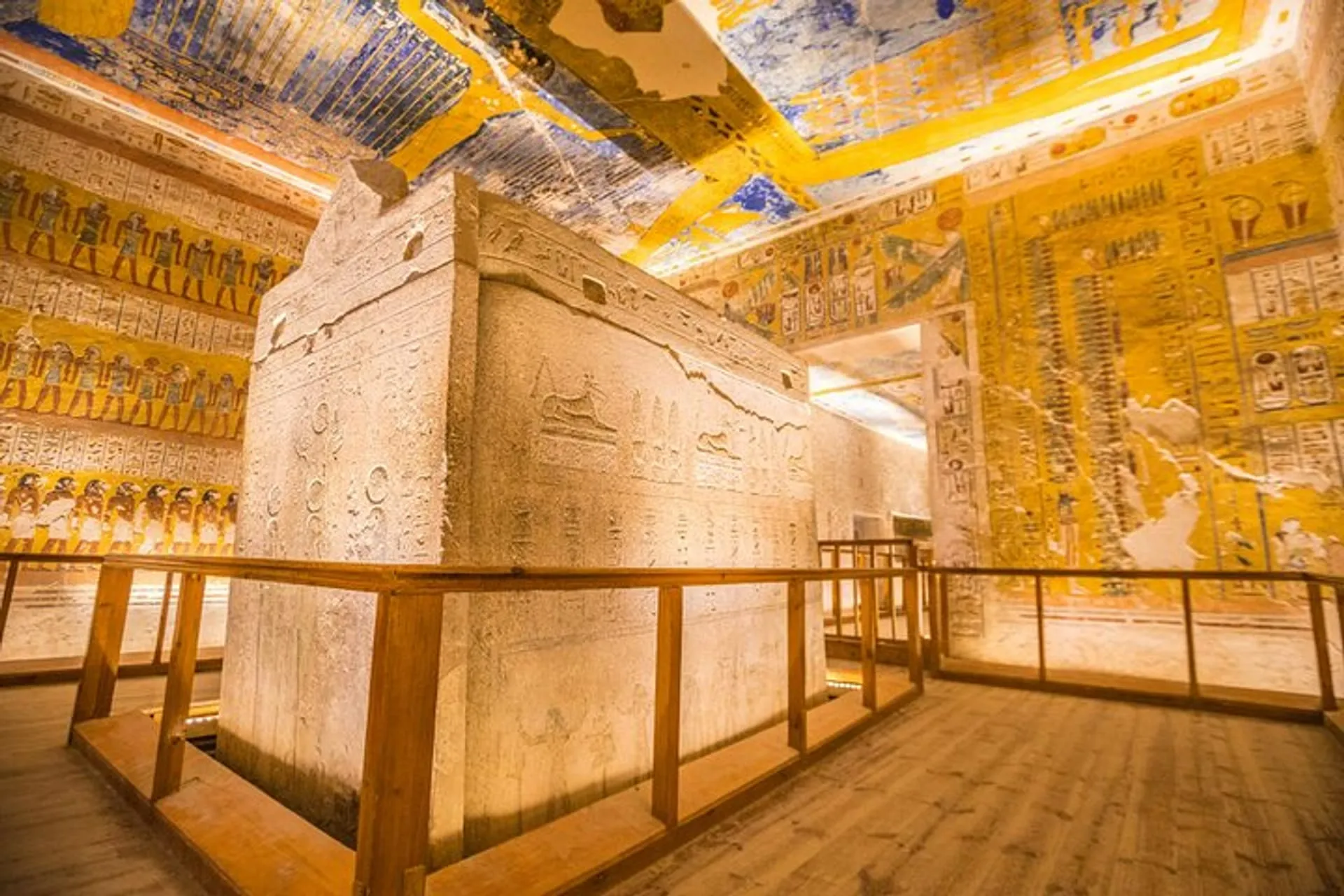
Smart planning begins with timing. Start early, identify your priority tombs, and check whether your ticket package includes premium entries or only standard access. If you travel independently, confirm transport return times and carry water, sunscreen, and cash for small purchases. If you travel with a guide, ask in advance how long you will spend in each site so your expectations match the day’s rhythm.
Consider energy management as much as logistics. Tomb interiors can feel warm and enclosed, and repeated descents can be physically demanding. Build short breaks into your schedule, and pair intensive site visits with one calmer stop, such as a shaded temple terrace or a relaxed Nile-side lunch. Good pacing turns a demanding day into a deeply rewarding one.
Photography, etiquette, and practicalities
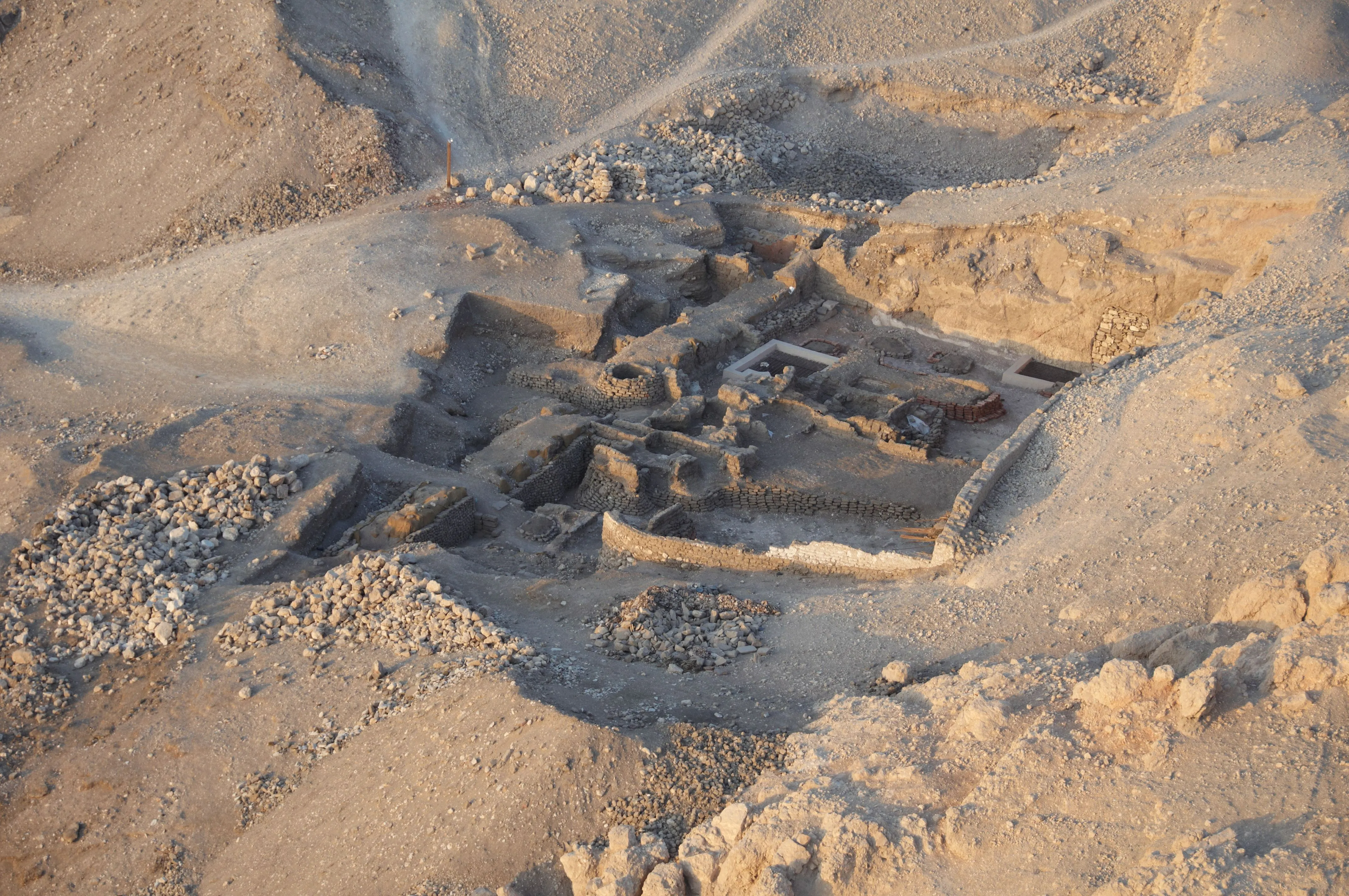
Photography rules may differ between tombs and can change over time, so always verify what is currently allowed. Even where non-flash photography is permitted, low light and movement constraints mean you should prioritize steady shots and avoid blocking corridors. Often, the most meaningful moments are observed rather than captured, especially in smaller chambers where atmosphere and detail are best appreciated directly.
Practical etiquette helps everyone: move calmly, avoid touching painted surfaces, and keep conversations low in enclosed areas. If you are traveling with children, prepare them in advance for quieter behavior in tomb interiors. These simple habits preserve both the artwork and the visitor experience, and they make your own time in the Valley noticeably more focused and enjoyable.
Nearby sites worth combining
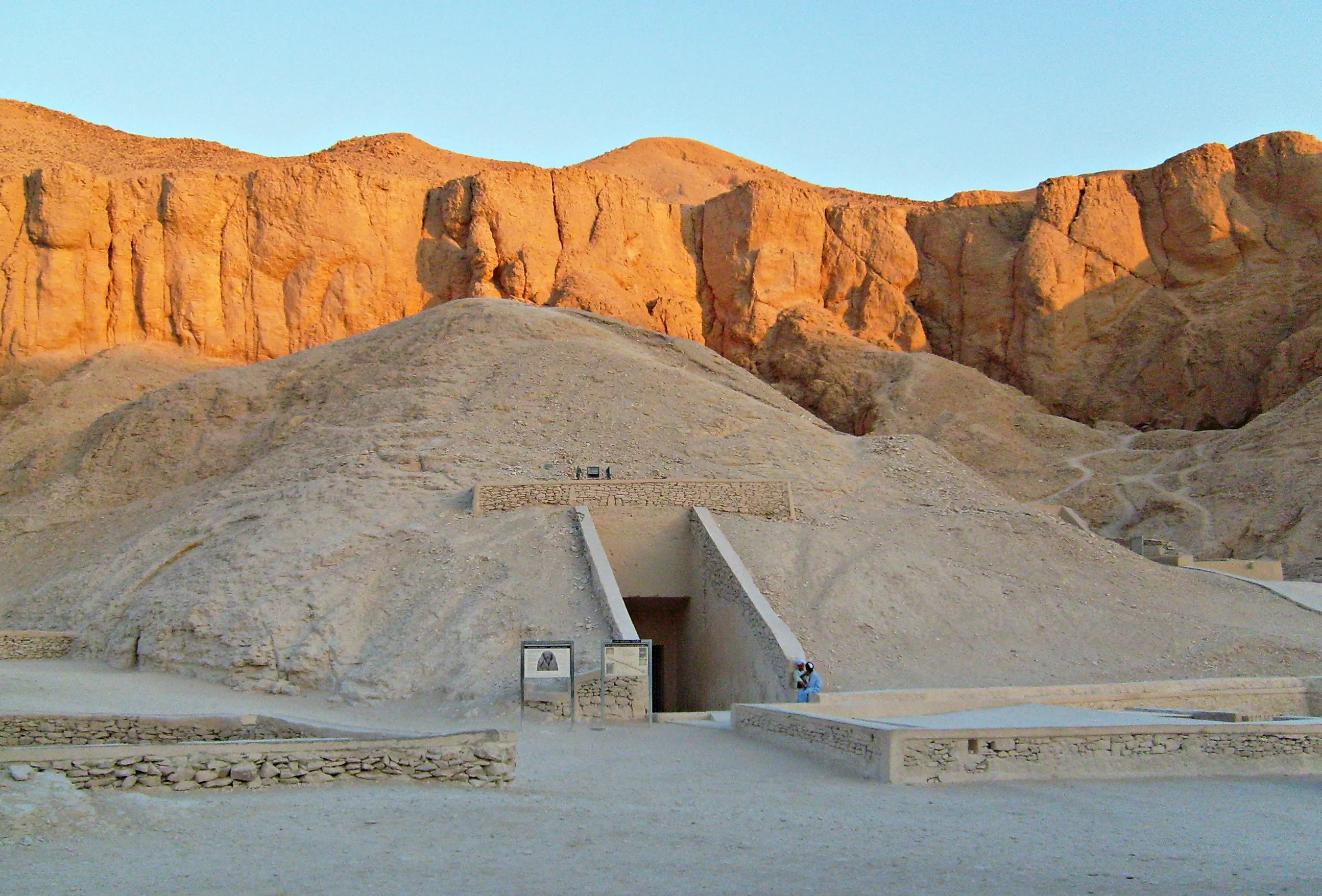
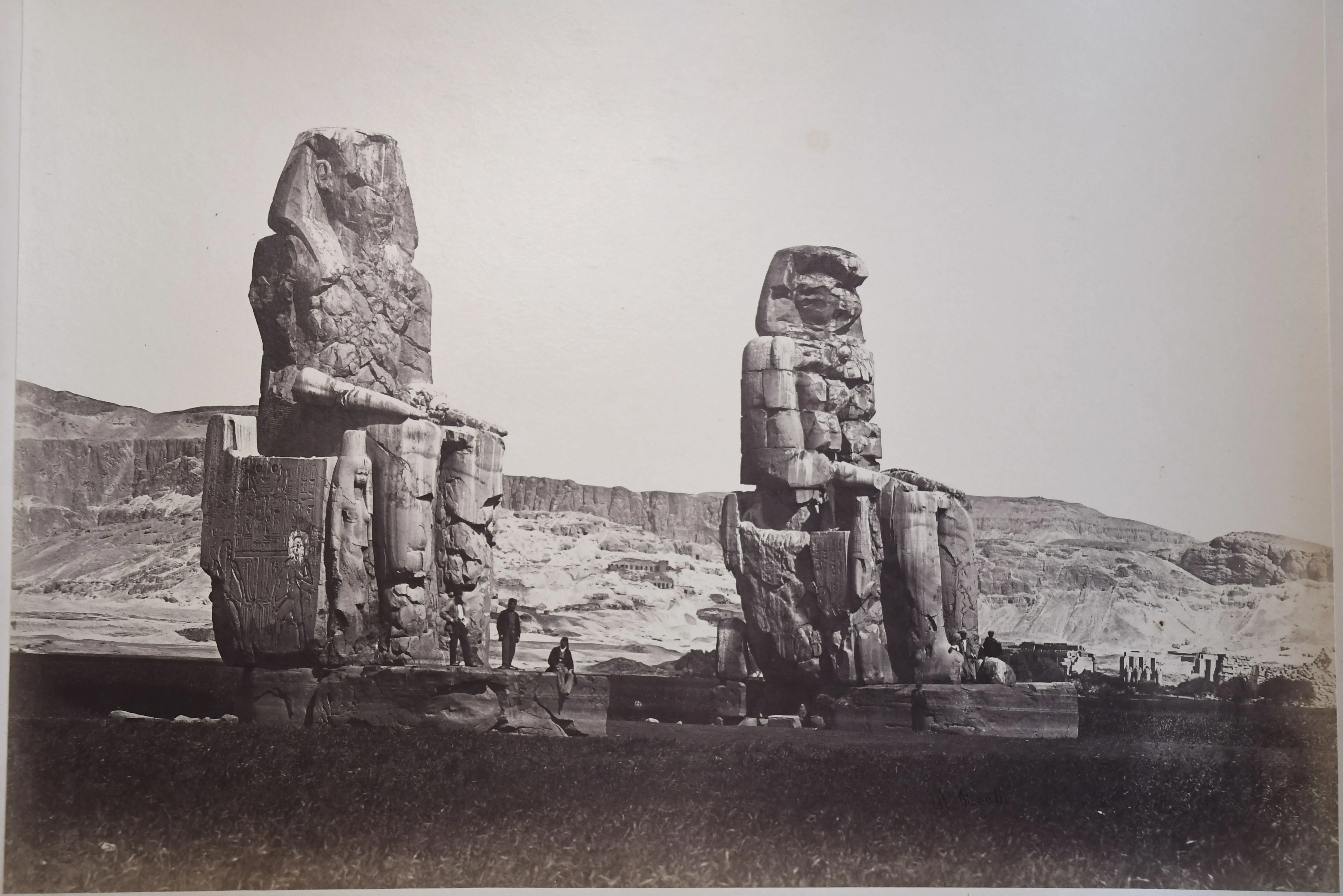
Many visitors combine the Valley of the Kings with the Temple of Hatshepsut, the Colossi of Memnon, and sometimes Medinet Habu or Deir el-Medina. This combination creates a balanced historical arc: royal burial ideology, monumental temple architecture, and the working world of the artisans who built and decorated tombs. If time allows, adding one carefully chosen extra site often delivers more insight than rushing through many.
For a broader Luxor narrative, pair your West Bank morning with an East Bank afternoon at Karnak or Luxor Temple. Seen together, these landscapes reveal how ritual, kingship, and cosmic symbolism connected both shores of the Nile. The result is a fuller understanding of ancient Thebes as an integrated sacred city rather than a set of isolated attractions.
Why the Valley still feels alive
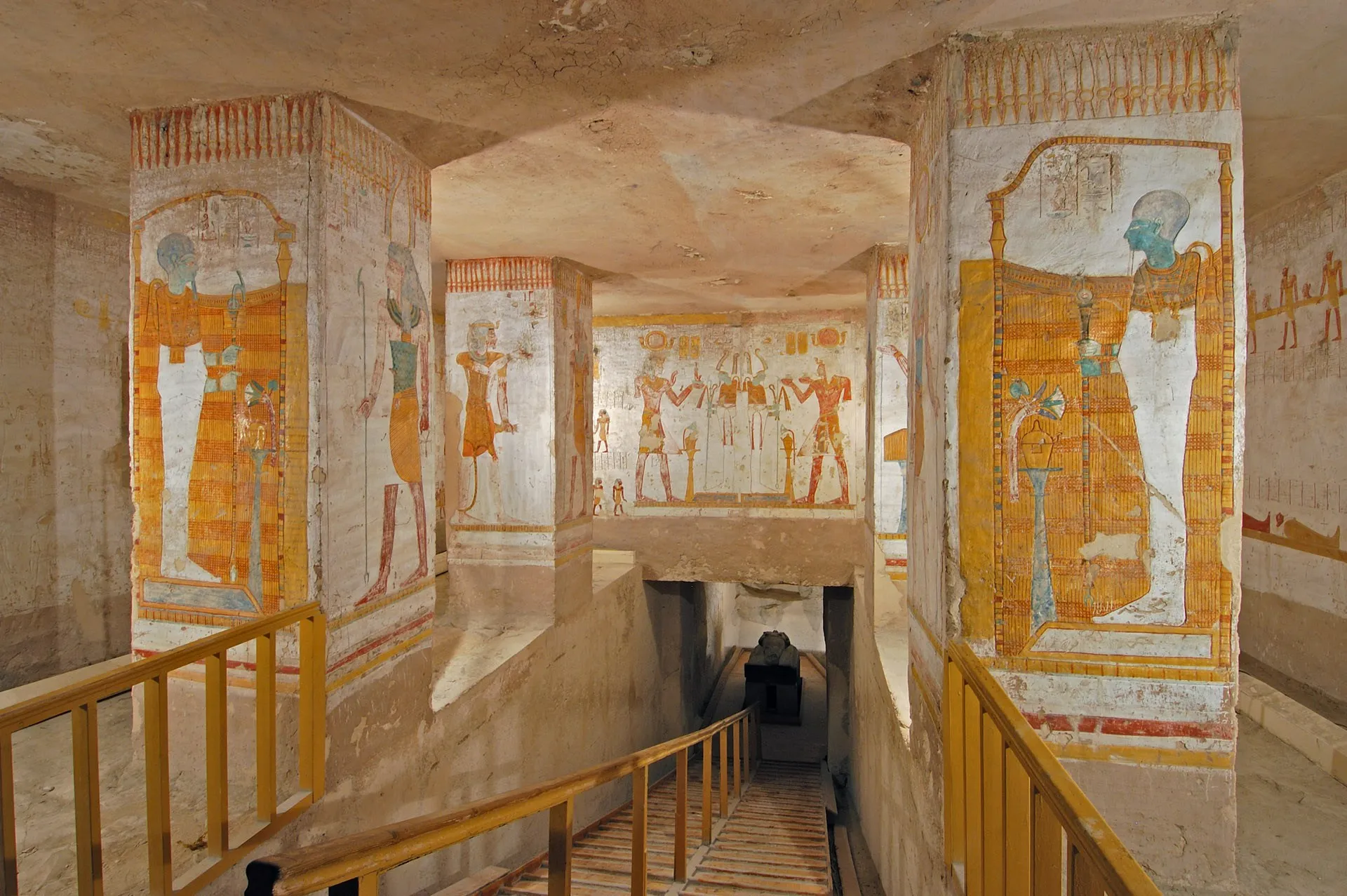
The Valley of the Kings can appear silent at first, but it is alive with stories once you learn how to read it. Every carved corridor reflects a political moment, every painted register encodes theological meaning, and every conservation decision in the present shapes what survives from the past. You are not simply walking through old tombs; you are moving through a complex dialogue between ancient intention and modern stewardship.
By day’s end, most travelers carry away more than facts. They remember the desert light at the valley entrance, the hush inside decorated chambers, the emotional pull of names known for millennia, and the surprising intimacy of spaces made for eternity. That combination of grandeur and human closeness is precisely why a Valley of the Kings tour from Luxor remains one of the most powerful heritage experiences in the world.
Table of Contents
From Thebes to royal necropolis
Long before modern visitors crossed the Nile in air-conditioned vans and tour buses, this landscape formed part of ancient Thebes, the ceremonial and political heart of New Kingdom Egypt. On the East Bank, colossal temples like Karnak and Luxor projected divine kingship through processions, pylons, and towering columns. Across the river on the West Bank, where the sun seemed to die each evening, Egyptians saw a sacred geography linked to death, rebirth, and transformation. This symbolic contrast between east and west shaped how rulers imagined eternity: life and kingship on one shore, burial and regeneration on the other.
By the 16th century BCE, pharaohs began shifting away from obvious pyramid-style royal monuments toward hidden rock-cut tombs in remote valleys. The result was what we now call the Valley of the Kings, a place where architecture, theology, and political power fused into one extraordinary funerary system. To walk here today is to step into a deliberate ritual landscape: harsh, silent, and monumental, designed to protect royal bodies and guide royal souls through the cosmic night toward rebirth with the rising sun.
Why the valley was chosen
The Valley of the Kings was not chosen by chance. Its dry climate, concealed side wadis, and difficult terrain offered better protection than exposed funerary complexes on open plains. The peak of el-Qurn, rising like a natural pyramid above the valley, may also have held symbolic significance, echoing older royal traditions while supporting a newer strategy of secrecy. In this setting, tomb entrances could be cut discreetly into the bedrock, then concealed after burial ceremonies.
Yet practical security was only part of the story. The valley also embodied sacred order. Royal tombs were conceived as journeys through darkness toward renewal, mirroring the nightly voyage of the sun god through the underworld. Descending corridors, chambers, and painted ceilings were not mere decoration; they formed a ritual map for the king’s transformation into an eternal, divine presence. Even today, the route through each tomb feels intentionally choreographed, moving from daylight into a symbolic cosmos beneath the mountain.
How tombs were designed and built
Building a royal tomb was a multiyear effort involving architects, quarry workers, plasterers, draughtsmen, and master painters. Teams from nearby Deir el-Medina, a settlement of highly skilled craftsmen, carved corridors into limestone, corrected unstable rock, and prepared walls with plaster layers before applying ink sketches and color. The work had to balance engineering and symbolism: chamber dimensions, alignment, and decorative programs all reflected theological priorities as well as practical constraints.
The artistry remains astonishing. In many chambers, you can still trace fine black outlines beneath pigments where artists first planned each figure. Gods, guardians, serpents, stars, and ritual texts unfold in ordered registers, almost like a visual manuscript wrapping the king in protective knowledge. What appears decorative at first glance is deeply functional in ancient terms: every image, sign, and formula was part of a spiritual technology designed to ensure successful rebirth in the afterlife.
Tutankhamun and the global fascination
No modern story of the Valley of the Kings is complete without Tutankhamun. In 1922, Howard Carter’s discovery of the young king’s tomb electrified the world, not because Tutankhamun had been the most powerful ruler, but because his burial remained comparatively intact. The extraordinary objects found within—from the iconic gold mask to ceremonial furniture and chariots—reshaped public imagination and launched a global wave of fascination with ancient Egypt.
Today, visiting Tutankhamun’s tomb offers a different kind of impact: intimate scale, quiet atmosphere, and the realization that this globally famous pharaoh died very young. Many travelers are surprised by how personal the space feels compared with grand temple architecture. It is a reminder that the Valley is not only about monumental history, but also about individual lives, abrupt endings, and the human desire to endure through memory and ritual.
Sacred texts on the tomb walls
One of the most compelling aspects of a Valley visit is reading the tombs as sacred literature in visual form. Scenes from texts such as the Amduat, the Book of Gates, and the Litany of Ra describe the sun god’s nocturnal passage and the obstacles faced before dawn. The king, identified with divine power, follows this path to defeat chaos and emerge renewed. For ancient viewers, these images were not symbolic art alone; they were active, protective knowledge.
Details vary dramatically between tombs. Some chambers emphasize cosmic geography with segmented underworld zones; others focus on divine encounter, ritual speech, or celestial cycles. This variation reflects changing religious priorities, artistic schools, and royal identities across dynasties. Even if you do not read hieroglyphs, the rhythm of repeated figures, boats, gates, and guardian deities communicates a coherent worldview where order is constantly defended against darkness.
Queens, nobles, and the wider landscape
Although the Valley of the Kings is the headline destination, it sits within a broader funerary ecosystem. Nearby lie the Valley of the Queens, nobles’ tombs, mortuary temples, and workers’ settlements that reveal how royal burial programs depended on entire communities. These related sites add social depth to the pharaonic story, showing not only kings and gods but also administrators, artisans, priests, and families whose labor sustained the necropolis.
Including one or two complementary sites in your itinerary can transform your understanding of ancient Thebes. The Valley gives you royal ideology at its most concentrated; surrounding monuments show how that ideology was produced, maintained, and remembered. Together they offer a richer narrative than any single stop, linking grandeur with everyday human craftsmanship.
Archaeology, discovery, and modern science
The Valley’s modern history is also a story of excavation methods evolving over time. Early explorers mapped and collected, sometimes with incomplete records by today’s standards. Later missions introduced more systematic documentation, conservation science, and contextual archaeology. Stratigraphic study, epigraphy, and environmental monitoring now help researchers interpret not only objects, but also burial practices, restoration phases, and long-term site changes.
Contemporary science continues to refine what we know. High-resolution imaging, material analysis, and non-invasive survey techniques reveal pigment composition, tool marks, microclimate stress, and previously unnoticed features. For visitors, this means the Valley is not a closed chapter of the past but an active research landscape, where each season can produce new insights about technology, belief, and royal identity.
Conservation challenges today
Preserving tomb interiors is a constant challenge. Human presence increases humidity, heat fluctuation, and particulate exposure, all of which can affect fragile plaster and pigments over time. Even respectful tourism creates cumulative pressure, especially in narrower chambers with limited airflow. As a result, authorities rotate tomb access, enforce capacity controls, and occasionally close areas for stabilization and documentation.
These measures can feel restrictive in the moment, but they are essential for long-term survival of the artwork. Responsible visitation—staying on paths, avoiding contact with walls, and following staff guidance—directly supports conservation goals. In practical terms, every careful visitor helps ensure that future generations can still experience these painted chambers in meaningful condition.
Visiting with cultural sensitivity
The Valley of the Kings is both a global destination and a national heritage treasure with deep cultural significance. A respectful approach goes beyond basic rules: it means understanding that these spaces were sacred environments, not decorative backdrops. Quiet observation, patient movement in narrow passages, and attention to guide instructions all contribute to a better experience for everyone on site.
Small choices matter. Give space to others in confined chambers, avoid flash if prohibited, and follow posted photography policies carefully. If you hire local guides, drivers, or craftspeople, you also support a living heritage economy tied to preservation and interpretation. Thoughtful travel here is not about limitation; it is about participating responsibly in the long life of an exceptional place.
Planning your Luxor tour day
Smart planning begins with timing. Start early, identify your priority tombs, and check whether your ticket package includes premium entries or only standard access. If you travel independently, confirm transport return times and carry water, sunscreen, and cash for small purchases. If you travel with a guide, ask in advance how long you will spend in each site so your expectations match the day’s rhythm.
Consider energy management as much as logistics. Tomb interiors can feel warm and enclosed, and repeated descents can be physically demanding. Build short breaks into your schedule, and pair intensive site visits with one calmer stop, such as a shaded temple terrace or a relaxed Nile-side lunch. Good pacing turns a demanding day into a deeply rewarding one.
Photography, etiquette, and practicalities
Photography rules may differ between tombs and can change over time, so always verify what is currently allowed. Even where non-flash photography is permitted, low light and movement constraints mean you should prioritize steady shots and avoid blocking corridors. Often, the most meaningful moments are observed rather than captured, especially in smaller chambers where atmosphere and detail are best appreciated directly.
Practical etiquette helps everyone: move calmly, avoid touching painted surfaces, and keep conversations low in enclosed areas. If you are traveling with children, prepare them in advance for quieter behavior in tomb interiors. These simple habits preserve both the artwork and the visitor experience, and they make your own time in the Valley noticeably more focused and enjoyable.
Nearby sites worth combining
Many visitors combine the Valley of the Kings with the Temple of Hatshepsut, the Colossi of Memnon, and sometimes Medinet Habu or Deir el-Medina. This combination creates a balanced historical arc: royal burial ideology, monumental temple architecture, and the working world of the artisans who built and decorated tombs. If time allows, adding one carefully chosen extra site often delivers more insight than rushing through many.
For a broader Luxor narrative, pair your West Bank morning with an East Bank afternoon at Karnak or Luxor Temple. Seen together, these landscapes reveal how ritual, kingship, and cosmic symbolism connected both shores of the Nile. The result is a fuller understanding of ancient Thebes as an integrated sacred city rather than a set of isolated attractions.
Why the Valley still feels alive
The Valley of the Kings can appear silent at first, but it is alive with stories once you learn how to read it. Every carved corridor reflects a political moment, every painted register encodes theological meaning, and every conservation decision in the present shapes what survives from the past. You are not simply walking through old tombs; you are moving through a complex dialogue between ancient intention and modern stewardship.
By day’s end, most travelers carry away more than facts. They remember the desert light at the valley entrance, the hush inside decorated chambers, the emotional pull of names known for millennia, and the surprising intimacy of spaces made for eternity. That combination of grandeur and human closeness is precisely why a Valley of the Kings tour from Luxor remains one of the most powerful heritage experiences in the world.